Top Stories
India eyes reusable rockets, private firm plans 360-acre testing facility in Andhra
Private space firm Astrobase Space Technologies plans to invest Rs 800 crore to expand its rocket testing facility in Andhra Pradesh to around 360 acres with infrastructure for engine trials rocket-stage development and reusable launch vehicle testing
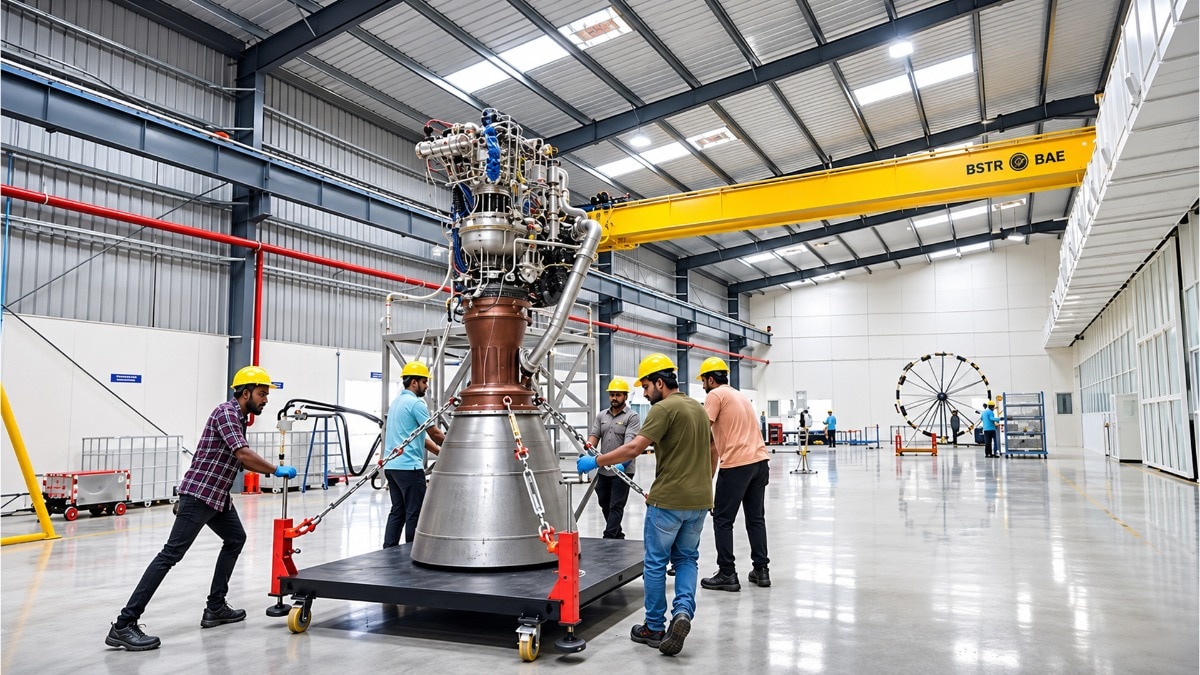
India’s push to develop next-generation space transportation systems is set to receive a boost, with private space technology company Astrobase Space Technologies planning a major expansion of its rocket testing infrastructure in Andhra Pradesh. The proposed facility, spread across approximately 360 acres, will support rocket-stage development, engine testing and trials aimed at advancing reusable launch vehicle technology.The expansion comes as India seeks to strengthen its indigenous space capabilities, increase satellite launch capacity and make access to space more affordable.
Reusable launch vehicles are seen as a key part of the next phase of global space transportation, with the potential to significantly reduce launch costs and turnaround times by allowing rockets or their stages to be used multiple times.Astrobase has signed a Memorandum of Understanding (MoU) with the Andhra Pradesh Economic Development Board to expand its existing rocket engine testing facility at Thimmasamudram in Sri Sathya Sai district. The agreement was signed on November 12 at the 31st CII Partnership Summit in Visakhapatnam, in the presence of Chief Minister N Chandrababu Naidu and Industries Minister TG Bharath.The company has announced an investment of Rs 800 crore for the proposed expansion.
WHAT WILL THE TESTING FACILITY BE USED FOR?The expansion will add 339 acres to Astrobase's existing approximately 22-acre facility, taking the total area to around 360 acres. The expanded site is expected to accommodate rocket engine testing, launch vehicle stage development and validation, static hot-fire trials and experiments related to reusability.It will also support hop tests, in which a rocket stage undergoes controlled lift-off and landing manoeuvres to demonstrate its ability to take off and return safely.
Such trials are an important step towards developing reusable launch vehicle systems. Before a rocket can be cleared for operational flights, its engines, individual stages and integrated systems must undergo extensive ground testing and validation.
Facilities capable of conducting these trials are therefore essential to the development of reliable launch vehicles.PRIVATE SECTOR'S GROWING ROLE IN INDIA'S SPACE PROGRAMMEThe proposed investment also highlights the expanding role of private companies in India's space ambitions. Following the opening up of the sector to private participation, domestic firms have been seeking to develop capabilities across rocket propulsion, launch vehicles, satellite manufacturing and related technologies.Astrobase has said its broader ambition is to develop launch systems capable of transporting up to 1,000 tonnes of payload to space annually from Indian soil.
This is a long-term target outlined by the company and does not represent an existing or operational launch capability.The company is also planning a separate investment of Rs 500 crore in Karnataka, which will include a manufacturing facility in Bengaluru. The proposed unit will house infrastructure for additive manufacturing, fabrication, non-destructive testing, quality inspection, and engine and stage assembly.These capabilities will support the company's Everest engine and AB220 medium-lift launch vehicle programmes.According to Astrobase, the Andhra Pradesh expansion is expected to generate around 500 direct and 1,000 indirect employment opportunities.WHAT IT MEANS FOR INDIA'S SPACE AMBITIONSThe investments reflect a broader effort to build an indigenous ecosystem capable of supporting the entire launch vehicle development process, from manufacturing and engine validation to flight testing and eventual deployment.However, the success of these initiatives will ultimately depend on translating infrastructure and engineering capabilities into flight-ready vehicles, successful technology demonstrations and reliable operational launch systems.For India, the larger challenge is not merely to build more rockets, but to develop launch vehicles that can deliver payloads to orbit more frequently, reliably and economically.
Reusability could play a significant role in achieving that goal.- Ends